 Protected by law
In the forest
Thailand's wild herds
- Estimate
- 4,013 to 4,422
- Main homes
- Three forest complexes
- Protected since
- 1921
Guides
Language
EnglishCurrency
US dollar · $Prices on GetYourGuide appear in your chosen currency.
Guide · The animal
Before you meet one, it helps to know the animal. These Asian elephant facts come from zoologists, a specialist group and Thai welfare research, not from tour brochures.
Editorial team, elephantsanctuarytour.comUpdated October 24, 2026Read time: 6 min60 sources
Quick answer
The animal you meet on a day out of Chiang Mai is Elephas maximus, the Asian elephant, and the most important of all Asian elephant facts is its status: Smithsonian's National Zoo describes the species as endangered.1 It estimates the remaining population at between 37,000 and 57,000 animals.2
World Animal Protection's latest report gives a narrower range for the wild herds, between 45,617 and 49,028 elephants spread across 13 countries.8 The IUCN specialist group that studies the species also counts 13 range states.9 The ranges differ because counting a forest animal is hard; every source agrees the numbers are small for a continent.
Adult Asian elephants weigh on average between 2,750 and 5,420 kg and typically stand 1.8 to 3.8 m tall at the shoulder.34 That makes them the largest animal most visitors will ever stand close to. Seen up close in a forest clearing, the scale is hard to take in from photographs alone.
Law and history
1921
Killing or capturing wild elephants is prohibited by the Wild Elephant Protection Act.10
1939
The Draught Animal Act classes captive elephants as livestock.11
1989
Captive elephants move mainly into tourism after the ban.12
2017
Official figures report 3,783 captive elephants in Thailand.6
September 2024
A mapping launched in Bangkok estimates 4,013 to 4,422 wild elephants.135
Today
Captive calves must be registered within 90 days of birth.14
The trunk has about 150,000 muscle units and tendons, enough to lift a log or pick up a single fruit.15 It can hold about 7.57 liters of water, and Asian elephants have one small projection at its tip, a "finger" that helps them pick up small things with precision.1617
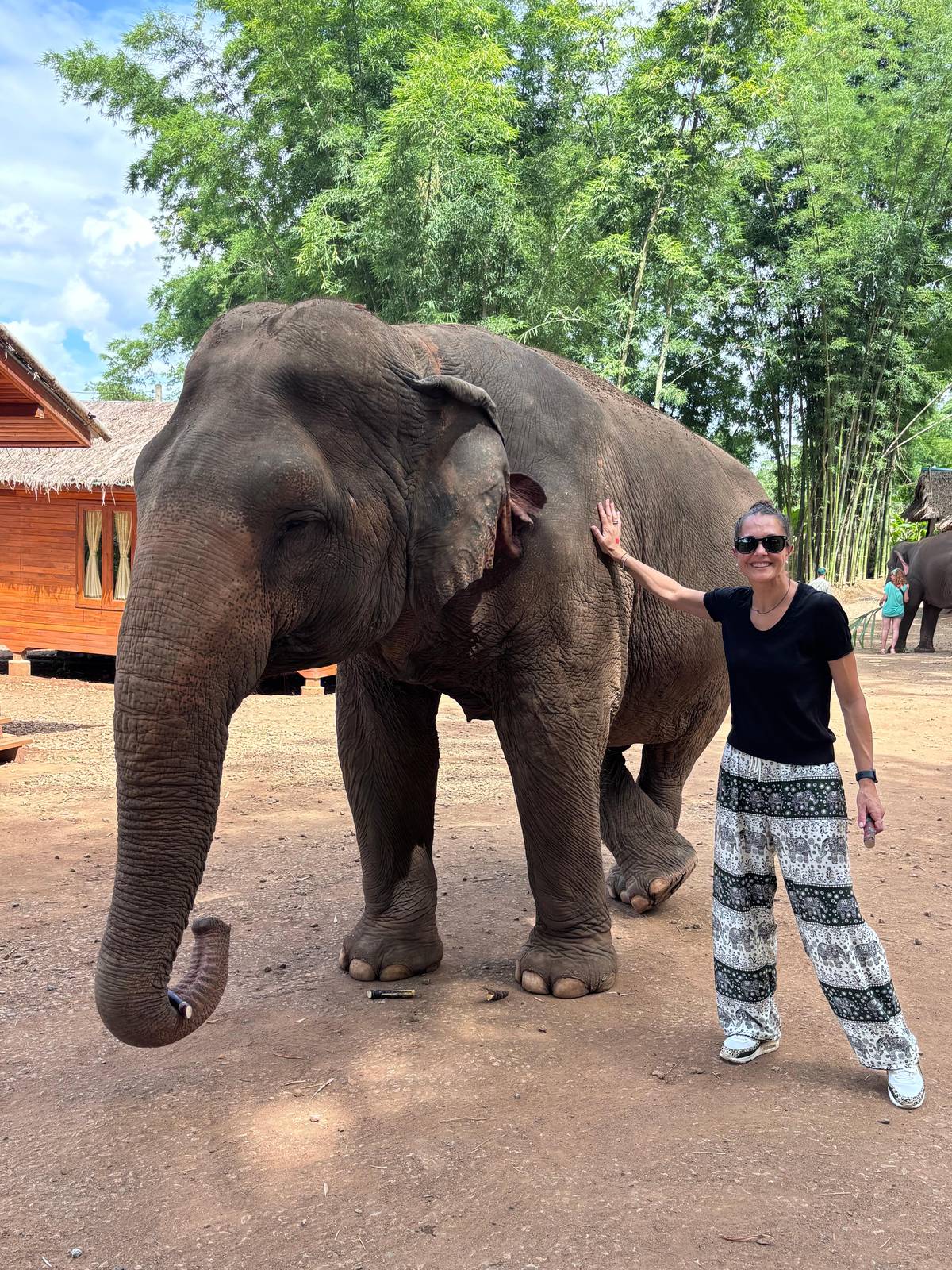
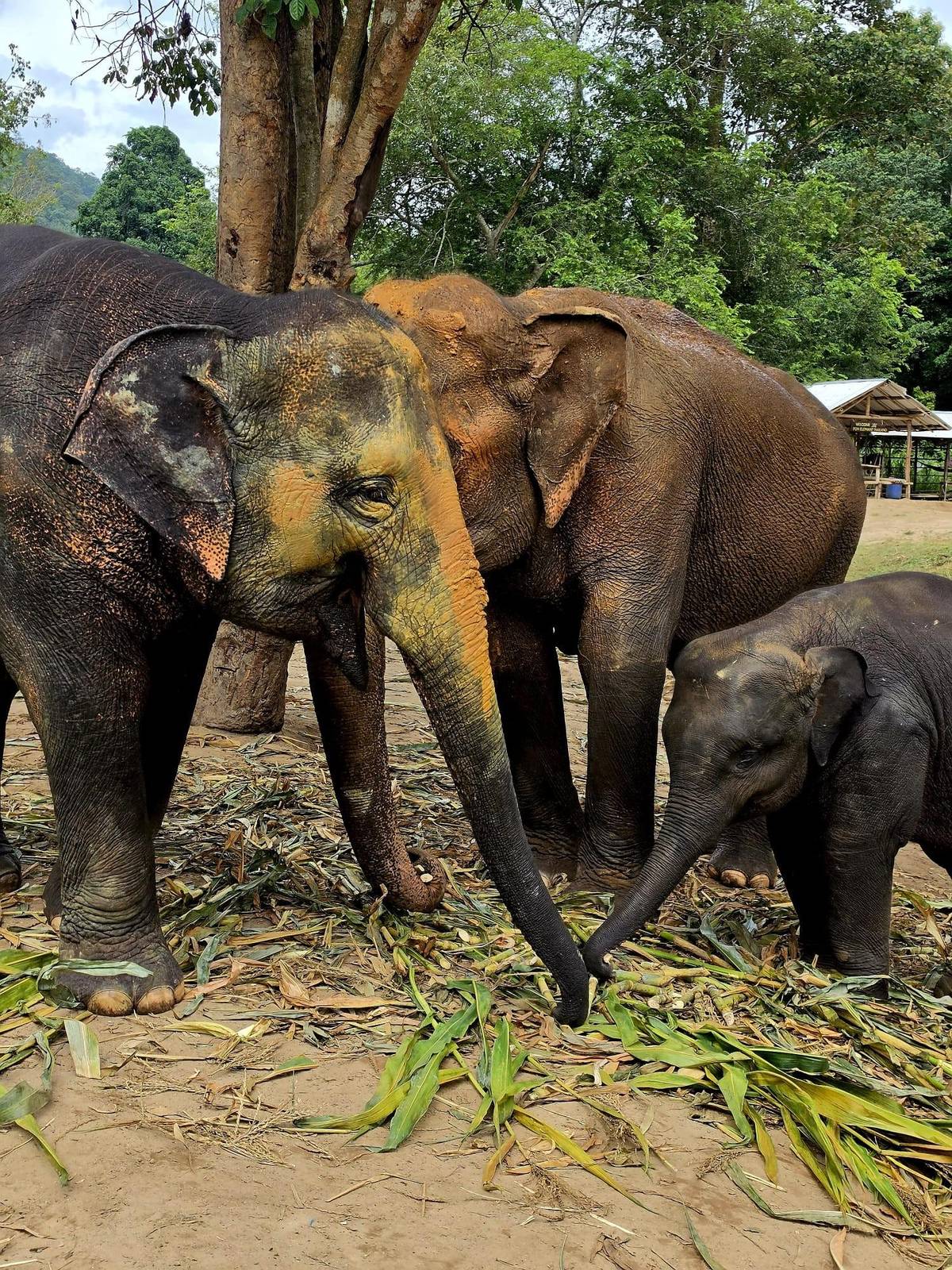
The skin looks like armour and is up to 2.54 cm thick in places, yet it is sensitive because of a rich nerve supply.18 Elephants protect it from sun and insects by covering themselves with dirt, sand and mud, and their large ears work as cooling devices on hot days.1920 When you see an elephant dust itself after a river visit, that is ordinary care, not a show.
Tusks are less common than many visitors expect. In Asian elephants only some males grow large tusks, and most females have small tushes that barely show.21 An elephant's brain weighs between 4 and 6 kg.22 Keep that in mind when a guide invites you to touch one; the animal feels far more than its hide suggests.
By the numbers
| Measure | Figure | Detail |
|---|---|---|
| Adult weight | 2,750 to 5,420 kg | Average for adults |
| Shoulder height | 1.8 to 3.8 m | Typical range |
| Food a day | 74 to 150 kg | In the wild |
| Water a day | About 189 liters | In the wild |
| Gestation | 21.5 to 22 months | Longest of any animal |
| Newborn calf | 68 to 158 kg | At birth |
| Brain | 4 to 6 kg | Adult animal |
| Walk a day | 1.6 to 6.4 km | Collared herds, Myanmar |
Figures from the Smithsonian's National Zoo Asian elephant fact sheet.34725262227
Three lives
Protected by lawThailand's wild herds
 Classed as livestock
Registered captive animals
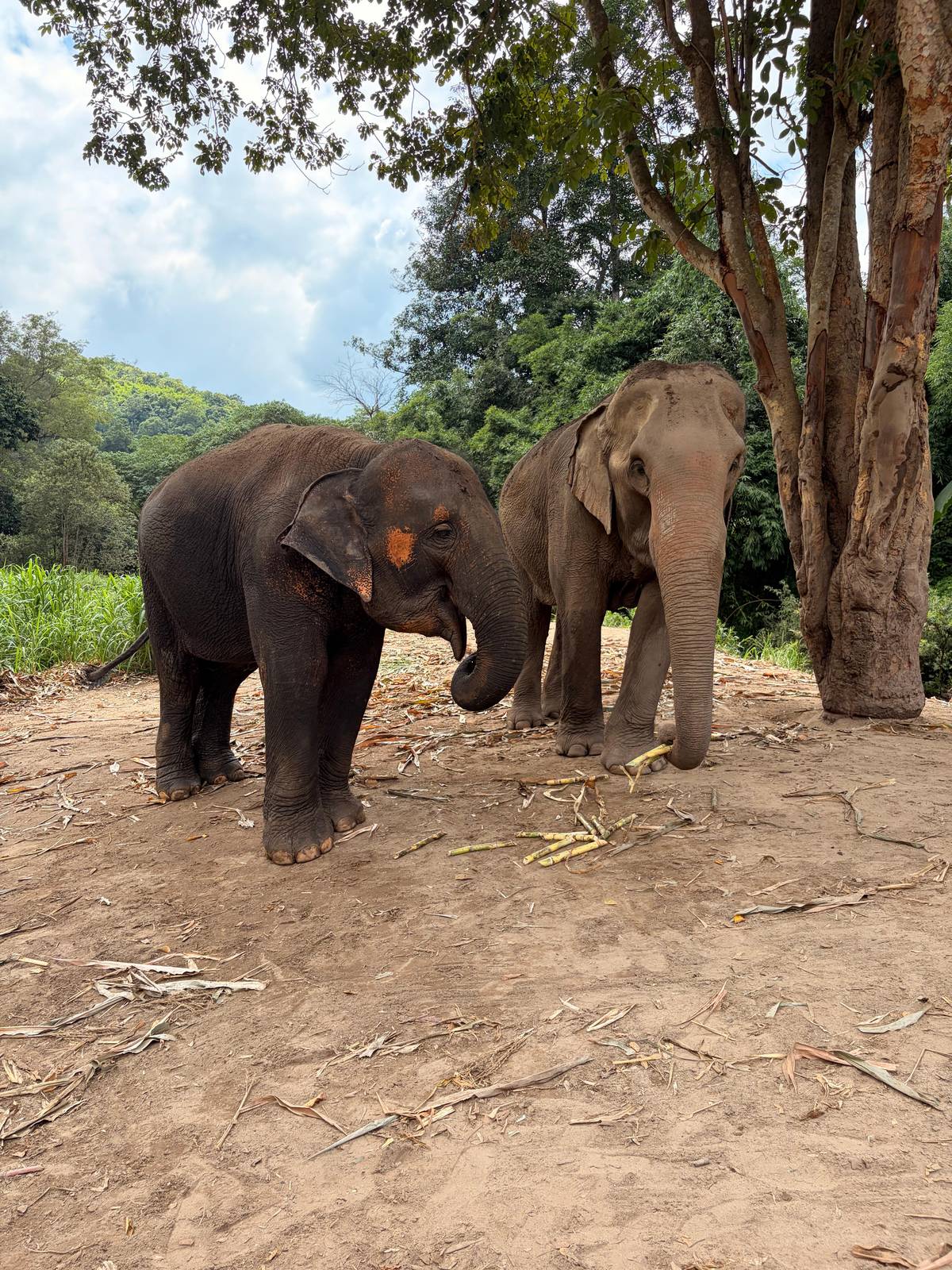 Where you meet them
Decision helper
Use what is known about the animal to choose your visit
Elephant-friendly venues are expected to educate visitors about the welfare of captive elephants.30
World Animal Protection says a venue showing calves, especially without their mothers, is not elephant-friendly.31
Captive elephants can be unpredictable and dangerous, especially when crowded.32
Conflict with people is the leading cause of elephant deaths in Asia.33
We conclude there are many ways to manage these elephants, and that not all tourist activities are bad for welfare.
Feeding a body that size takes most of the day. Asian elephants spend about three-quarters of each day eating or moving towards food or water, and in the wild an adult eats about 74 to 150 kg of food and drinks about 189 liters of water a day.357 They assimilate only about 44 percent of what they eat.36
Their diet is mainly grasses and browse, and bananas and sugar cane are favoured foods; you will see both at feeding stations.37 Asian elephants live in small herds of related females with their young, and unlike African elephants they have no matriarch.38 Males usually leave the herd at puberty, between 8 and 13 years old, and most healthy males enter a regular period of heightened aggression called musth by about age 30.3940
Breeding is slow. Gestation lasts 21.5 to 22 months, the longest of any animal, and a newborn calf weighs between 68 and 158 kg.2526 In the wild, mothers care for their calves for their first 4 to 5 years.41 Asian elephants typically live into their mid-50s, and median life expectancy for females is 47 years.42
Map
First the hills around Chiang Mai where the day trips go, then the whole country with Bangkok, the islands and the forests of the wild herds.
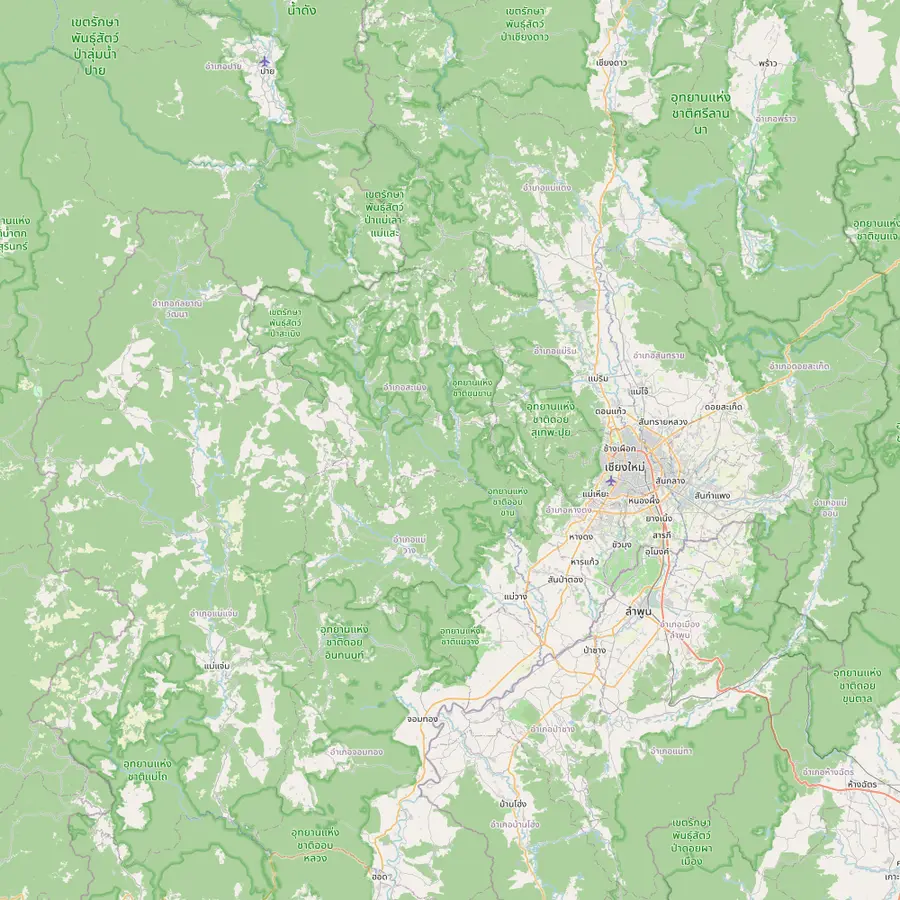 1Chiang Mai2Mae Wang3Doi Inthanon4Mae Chaem5Bua Tong Sticky Waterfall6Mae Taeng
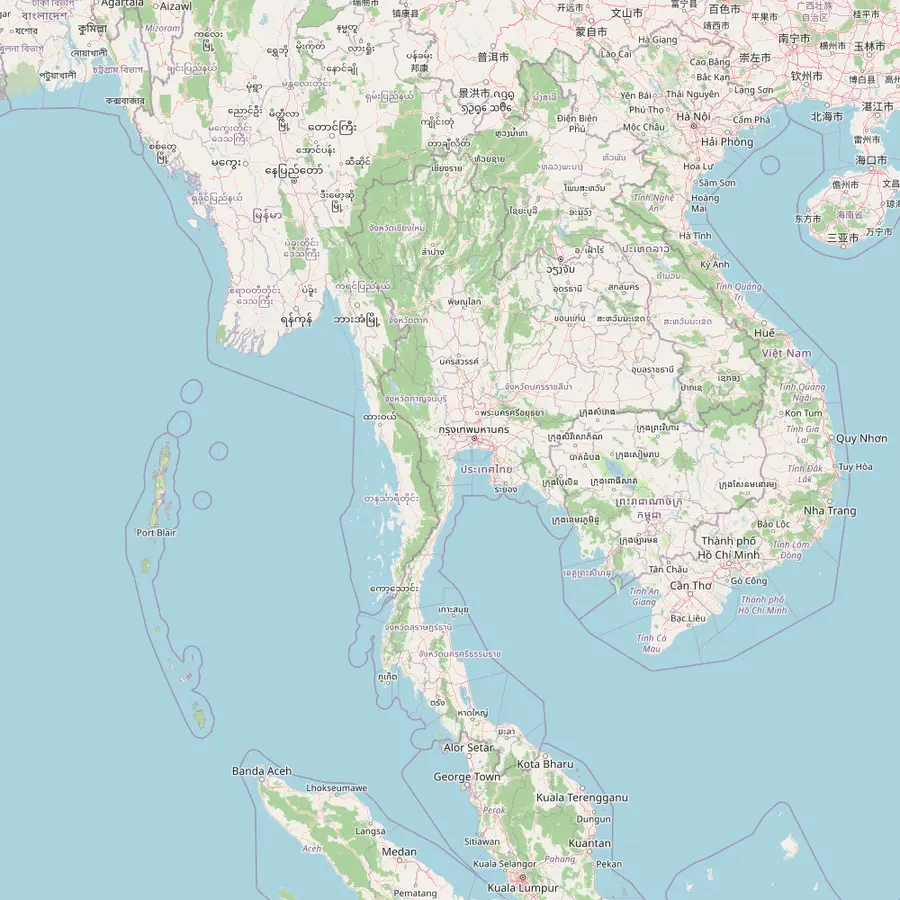 1Chiang Mai7Bangkok8Pattaya9Kanchanaburi10Western Forest Complex11Kaeng Krachan12Khao Yai13Phuket14Ko Samui
Start of the site tour: hotel pickup in downtown Chiang Mai, or the operator's office in town.
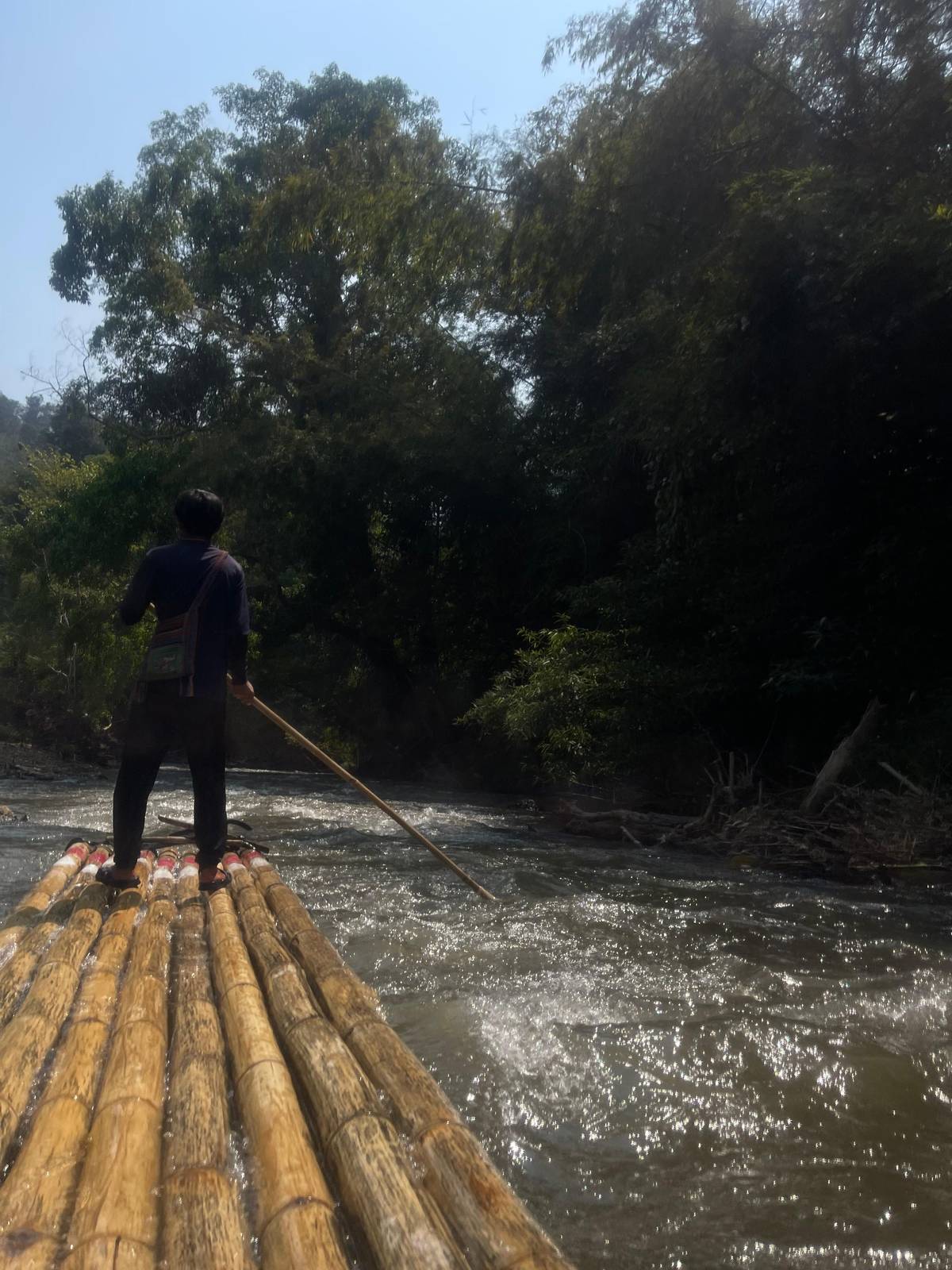
In Google Maps ↗The site tour's waterfalls and its bamboo raft ride on the Mae Wang River; an observation programme in Mae Wang District takes 3 hours with the elephants.
In Google Maps ↗One full-day listing pairs Doi Inthanon National Park with an elephant visit.
In Google Maps ↗A hands-off listing drives 2 hours here and hikes to find the elephants.
In Google Maps ↗The limestone falls you can climb, paired with an elephant visit on a 9-hour listing.
In Google Maps ↗Afternoon river tubing with 30 minutes of elephant observation; tubing starts at 1:30 PM.
In Google Maps ↗Day trips to Living Green Elephant Sanctuary take about 1.5 hours by van each way.
In Google Maps ↗The same sanctuary is about 45 minutes by van from Pattaya.
In Google Maps ↗A 10-hour listing from Bangkok pairs an elephant sanctuary with the Bridge on the River Kwai.
In Google Maps ↗The largest remaining protected forest in Southeast Asia, home to more than a third of Thailand's wild elephants.43
In Google Maps ↗One of the main forest complexes for Thailand's 4,013 to 4,422 wild elephants.544
In Google Maps ↗Dong Phayayen-Khao Yai, another of the forest complexes the wild herds live in.44
In Google Maps ↗On World Animal Protection's list of venues following its guidelines; one listing walks a 500-meter canopy walkway above the elephants.45
In Google Maps ↗Wettest in November, with 444.6 mm of rain in a normal month.46
In Google Maps ↗Checklist
Video
Until you tap play, the video stays unloaded.
So how many elephants are in Thailand? A mapping carried out with Thailand's Department of National Parks, Wildlife and Plant Conservation estimates the wild population at between 4,013 and 4,422.5 The survey covered 71 protected areas, 32 wildlife sanctuaries and 38 national parks.13
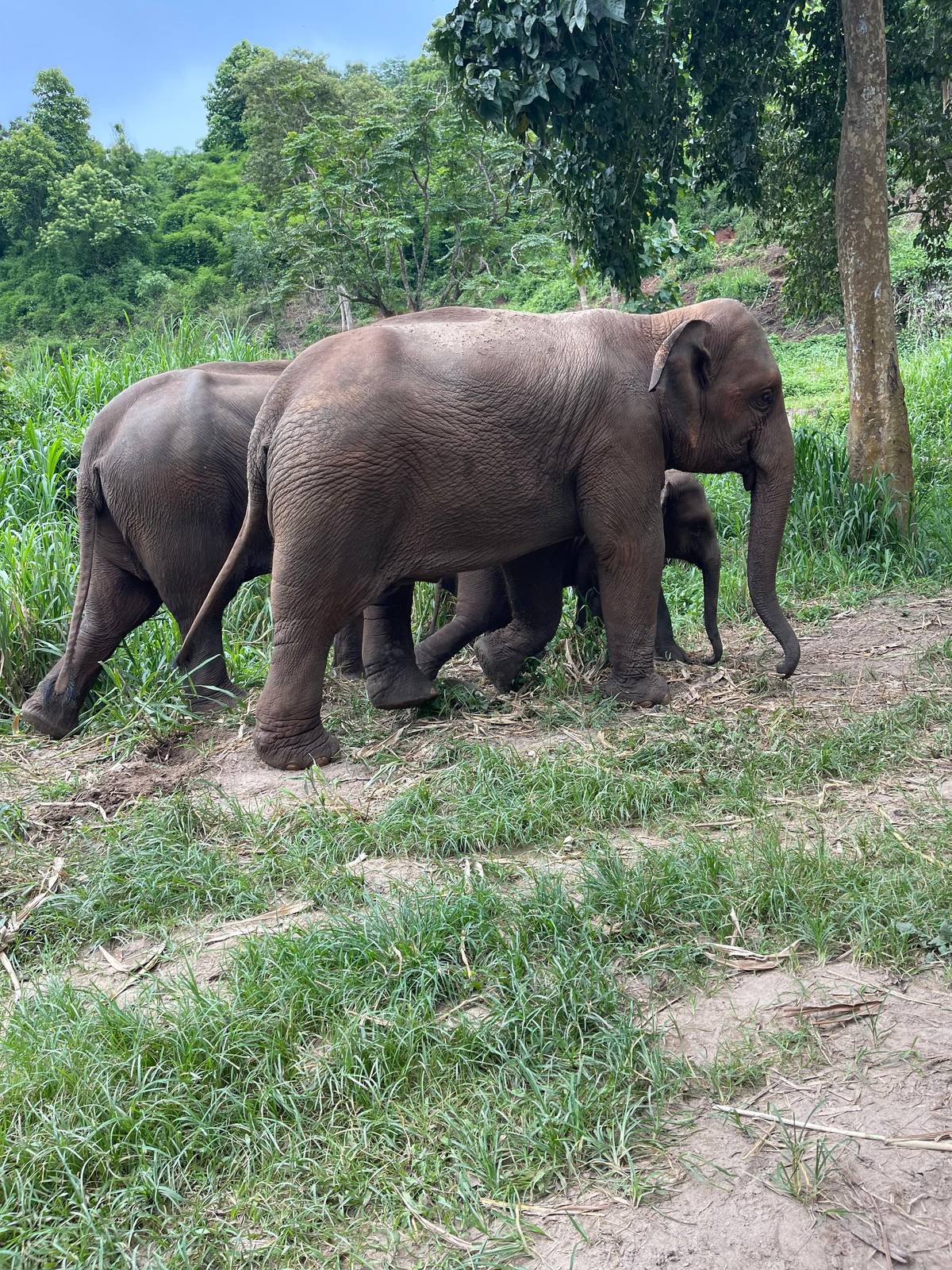
The wild herds live mainly in the Western Forest Complex, Kaeng Krachan and Dong Phayayen-Khao Yai.44 The Smithsonian calls the Western Forest Complex the largest remaining protected forest in Southeast Asia and home to more than a third of Thailand's wild elephants.43 The elephants you meet on a day trip from Chiang Mai are captive animals, not members of these wild herds.
Living near people is the main danger for wild elephants. The Smithsonian notes that experts consider conflict between people and elephants the leading cause of elephant deaths in Asia.33 Radio-collared wild elephants in Myanmar walked about 1.6 to 6.4 km a day, which shows how much space a herd needs.27 Herds that big need corridors between forests, not islands of green surrounded by farms.
Thailand has about as many captive elephants as wild ones. A review by researchers at Chiang Mai University and the Smithsonian puts the total at 6,783 to 7,483, of which 3,783 are captive and 3,000 to 3,500 wild.47 Its wild figure is an older estimate than the mapping above, so the two numbers do not match.
The law treats the two groups differently. Killing or capturing wild elephants has been prohibited since the Wild Elephant Protection Act of 1921, while under the Draught Animal Act of 1939 captive elephants are classed as livestock.1011 Since logging was banned in 1989, captive elephants have been used mainly for tourism.12 For a visitor, that makes each venue's own practices the thing to look at closely.
Thailand's Department of Livestock Development estimated 2,700 elephants working in 250 tourist venues in 2017.24 Captive elephants must now be registered within 90 days of birth.14 Standards for camps exist, but the same review found only six camps certified by the Department of Tourism and nine by the Department of Livestock Development, out of about 250.48
World Animal Protection's latest field survey assessed 236 venues holding 2,849 elephants, and found 2 out of 3 kept in poor living conditions.2349 During the day, 64% of the elephants observed were on short chains of at most 3 m when not working for tourists, and only 12% could roam freely.50 Three out of four adult elephants at the venues were female.51
The kinds of visit are changing. In that survey 42% of elephants were still used for rides, while observation-only experiences involved 7% of them, and those venues consistently scored highest for welfare.5253 A survey of 627 elephants at 33 camps in northern Thailand found management trending away from shows and saddle riding towards feeding, bathing and walking.54
Researchers and campaigners read these trends differently. World Animal Protection counts bathing and touching as red flags, while the Chiang Mai University and Smithsonian review concludes that not all tourist activities are bad for welfare.5534 Both agree that elephants are large, wild animals: media reports recorded 17 deaths and 21 serious injuries caused by captive elephants in Thailand between 2010 and 2016.56
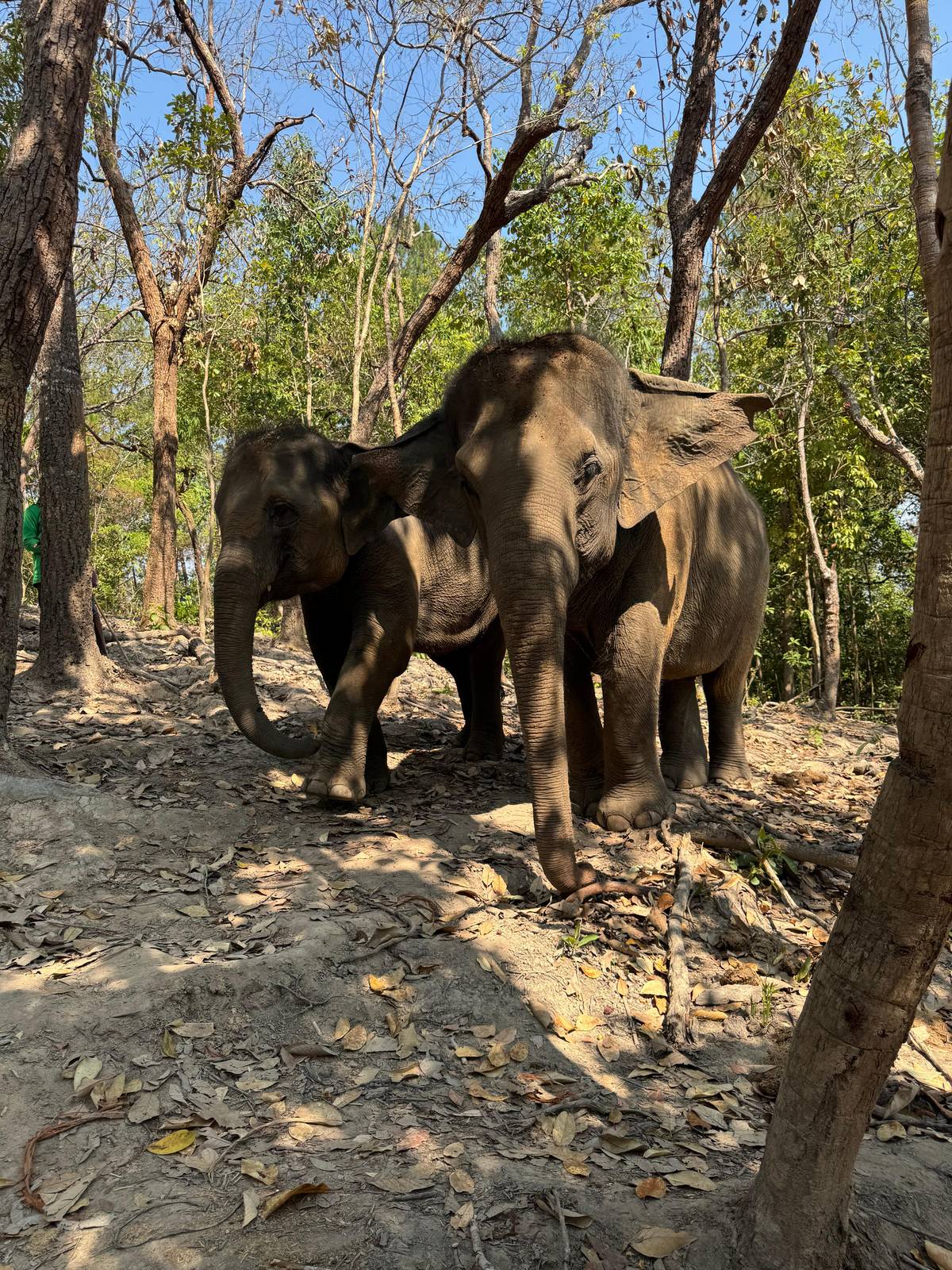
Knowing the animal changes what you notice on the day. Elephants tend to rest during the hottest hours, so a herd standing still in the shade at midday is behaving normally, not sulking.57 A dust bath or a roll in the mud after the river is skin care; it protects them from sun and insects.19
Family life is worth watching for too. A calf stays close to its mother for years, and in the wild she cares for it through its first 4 to 5 years.41 World Animal Protection says true sanctuaries do not breed elephants in captivity, so a venue full of young calves deserves a question about where they came from.58
Then watch the people. World Animal Protection notes that even at elephant-friendly venues, mahouts often walk with the elephants at a distance to keep everyone safe, and that such venues use positive reinforcement whenever possible.5960 A mahout who stays nearby is normal; what matters is how the animals are handled. Asking your guide about each elephant's age, history and daily routine is the easiest way to learn whether the venue knows its animals well.
Your elephant day
Hotel pickup option in Chiang Mai, lunch on the day, and no fee to cancel until 24 hours ahead.
Yes. Smithsonian's National Zoo lists them as endangered, with an estimated 37,000 to 57,000 animals left.12
Between 6,783 and 7,483. A scientific review puts the total at 6,783 to 7,483, of which 3,783 are captive; a later mapping counts 4,013 to 4,422 wild.475
Usually 2,750 to 5,420 kg. That is the Smithsonian's average range for adults, who stand 1.8 to 3.8 m at the shoulder.34
About 74 to 150 kg. Wild Asian elephants also drink about 189 liters of water a day and spend most of the day eating.735
21.5 to 22 months. It is the longest gestation of any animal, and a newborn calf weighs 68 to 158 kg.2526
Usually only small ones. Most females have small tushes; only some males grow large tusks.21
Sources