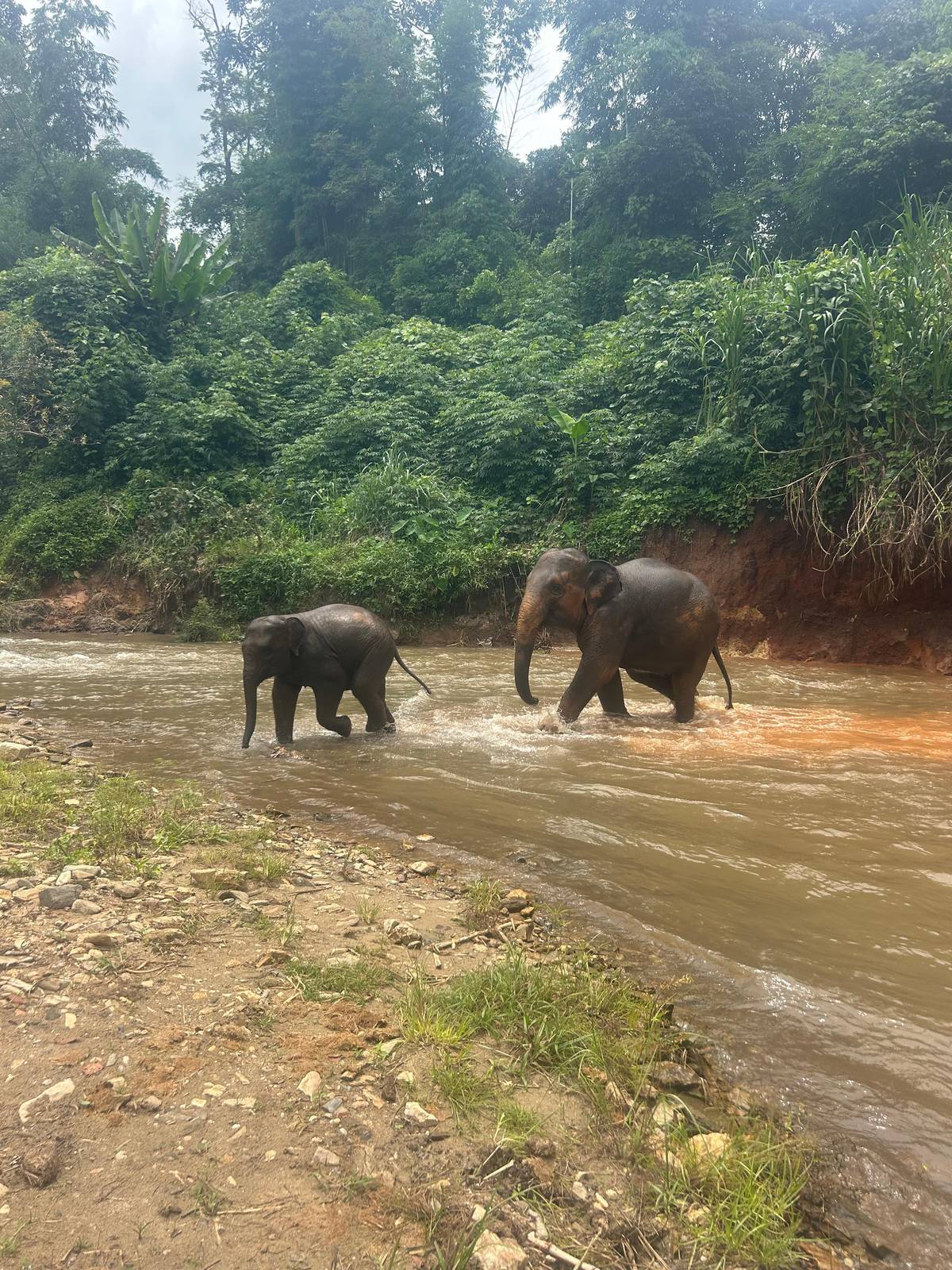
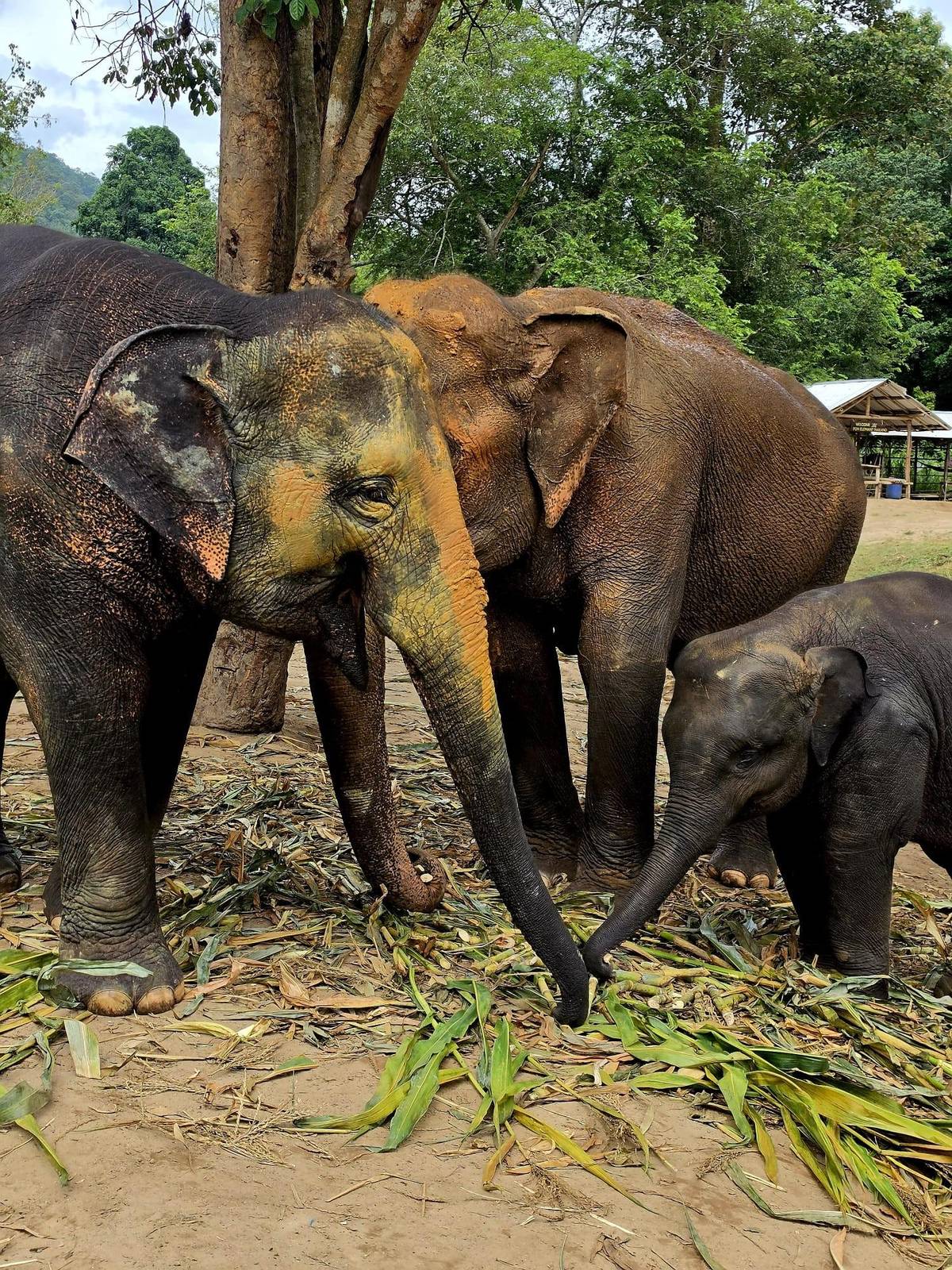
 Mild & dry
Cool season
November to February
- Daily high
- 29.2 to 32.9 °C
- Rainy days
- 1 to 3 a month
- Good for
- Long forest walks
Guides
Language
EnglishCurrency
US dollar · $Prices on GetYourGuide appear in your chosen currency.
Guide · Best time
Mild and dry in winter, fierce in spring, green and wet from May. Here is what each part of the year means for walking, bathing and rafting with elephants.
Editorial team, elephantsanctuarytour.comUpdated October 24, 2026Read time: 6 min9 sources
Quick answer
If comfort is your measure, the best time to visit an elephant sanctuary in Chiang Mai is the dry, mild stretch from November to February. At the Chiang Mai station those months see only 1 to 3 rainy days of 1 mm or more, with daily highs between 29.2 °C and 32.9 °C.1 Each of the other seasons has its own trade-offs, set out month by month below, and none of them rules out a good day.
All the monthly figures on this page are World Meteorological Organization normals for the Chiang Mai station, averaged over 1991 to 2020.1 The station stands in the city. The sanctuaries lie in the forested hills of districts such as Mae Wang, where early mornings can feel fresher and showers can be heavier. Read the numbers as the rhythm of the year, not as a promise for the date you book.
In a normal year Chiang Mai receives 1,139.2 mm of rain on 91.6 days with at least 1 mm.3 The bulk of it falls between May and October, and the year splits into a dry half and a wet half with short hot spells in between. That split matters on an elephant day more than in a city break, because the waterfall, the river and the raft all depend on the water.
The year in Chiang Mai
Nov to Feb
1 to 3 rainy days a month and highs of 29.2 to 32.9 °C.1
Mar and Apr
Highs of 35.4 and 36.7 °C, with 2 and 5 rainy days.1
Mid-May
The Thai Meteorological Department dated the 2026 onset to May 15.2
Jun and Jul
118 mm on 12 days in June, 149 mm on 14 days in July.1
Aug and Sep
223 mm on 17 days, then 207 mm on 15 days.1
October
124 mm on 9 days, before the dry months return.1
The cool season is a comfortable time for walking with elephants in the forest. January runs from about 15.7 °C at night to 30 °C by day, December from 16.9 °C to 29.2 °C.1 Early mornings in the hills call for a light layer on the drive out, but by midday a river dip feels pleasant rather than cold. Clear skies also make the long views across the valleys sharper, and the dirt paths are dry underfoot.
Rain is rare in these months. December, January and February each average just 1 day with at least 1 mm.1 With so little rain, the site tour's waterfall dip and raft ride seldom meet the heavy-rain rule that replaces them with a Khao Soi cooking class. It is the season in which the full programme is easiest to plan around.
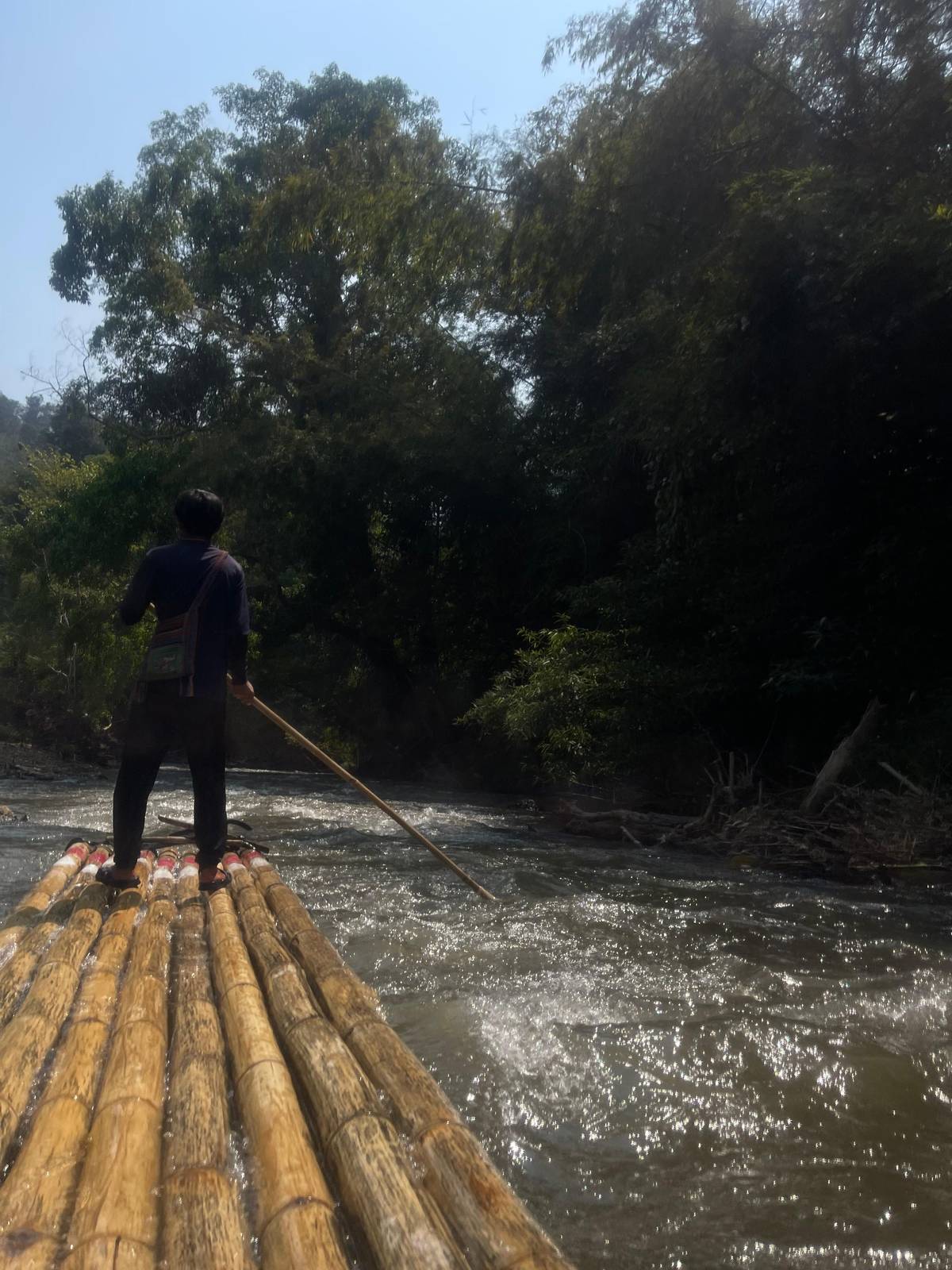
One caution applies on cold days. A raft-and-cooking listing notes that if it is too cold, the elephants are not bathed. Rivers also run lower in the dry months; a tubing trip north of the city warns that its river ranges from 30 cm to 1.5 m deep with the season. A low river means a slower and bumpier drift on a bamboo raft, with the boatman pushing off the stones more often.
Rainy days
Month by month
| Month | Daylight (h) | Darkness (h) | High / low | Wet days | In Chiang Mai |
|---|---|---|---|---|---|
| Jan | 11.1 | 12.9 | 30 / 16 °C | 1 | Dry, mild nights |
| Feb | 11.5 | 12.5 | 33 / 17 °C | 1 | Dry, warming |
| Mar | 12 | 12 | 35 / 20 °C | 2 | Hot and dry |
| Apr | 12.6 | 11.4 | 37 / 23 °C | 5 | Hottest |
| May | 13 | 11 | 35 / 24 °C | 12 | Rains begin |
| Jun | 13.3 | 10.7 | 33 / 25 °C | 12 | Rainy |
| Jul | 13.2 | 10.8 | 32 / 24 °C | 14 | Rainy |
| Aug | 12.8 | 11.2 | 32 / 24 °C | 17 | Wettest |
| Sep | 12.3 | 11.7 | 32 / 24 °C | 15 | Rainy |
| Oct | 11.7 | 12.3 | 32 / 23 °C | 9 | Rains easing |
| Nov | 11.3 | 12.7 | 31 / 20 °C | 3 | Dry again |
| Dec | 11 | 13 | 29 / 17 °C | 1 | Dry, mild nights |
Highs, lows and rainy days of 1 mm or more are the WMO 1991 to 2020 normals of the Chiang Mai city station; we compute the mid-month daylight ourselves.1 Season according to Thai Meteorological Department.2
Three seasons
Mild & dryNovember to February
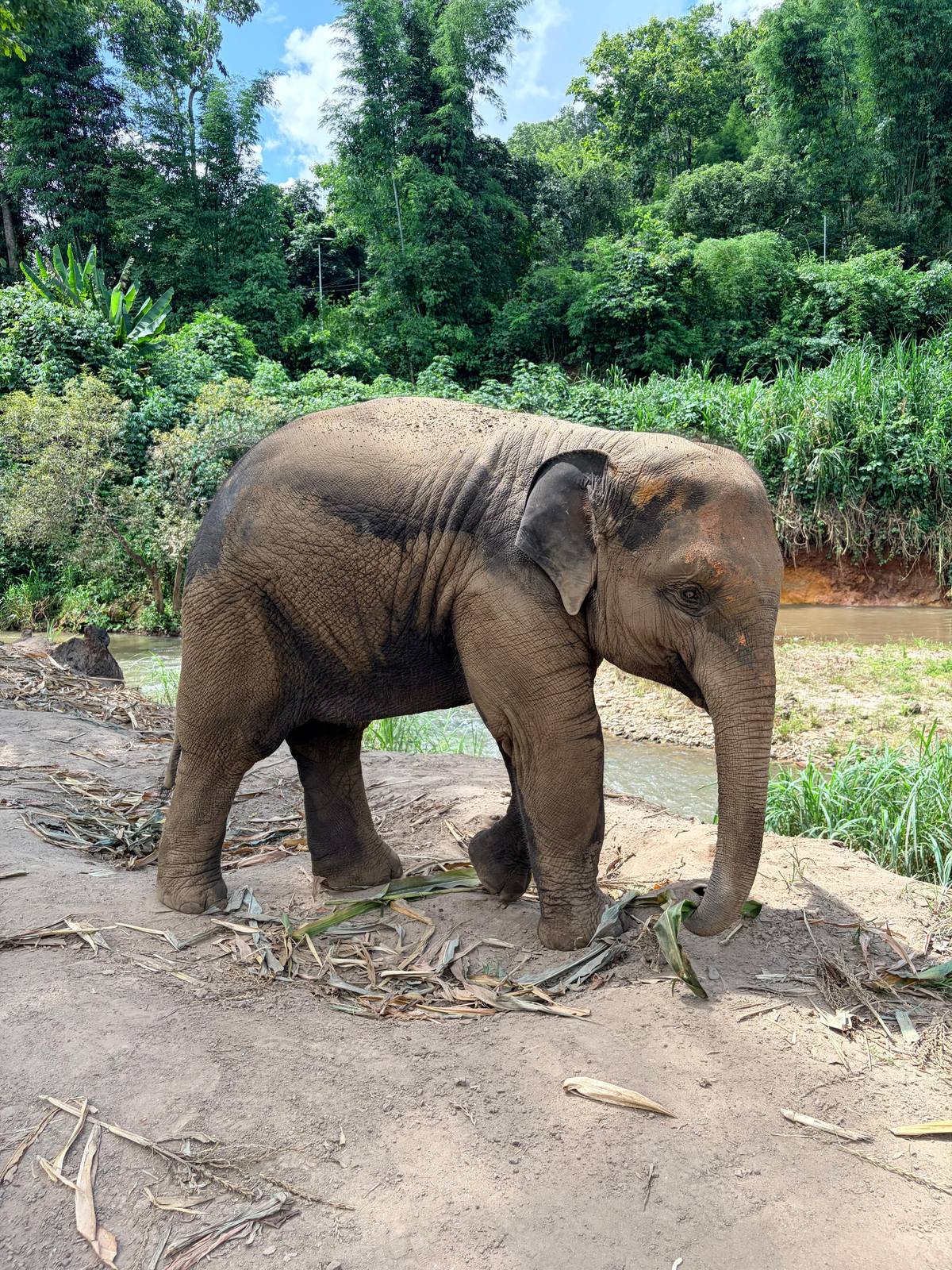 Hot & dry
March and April
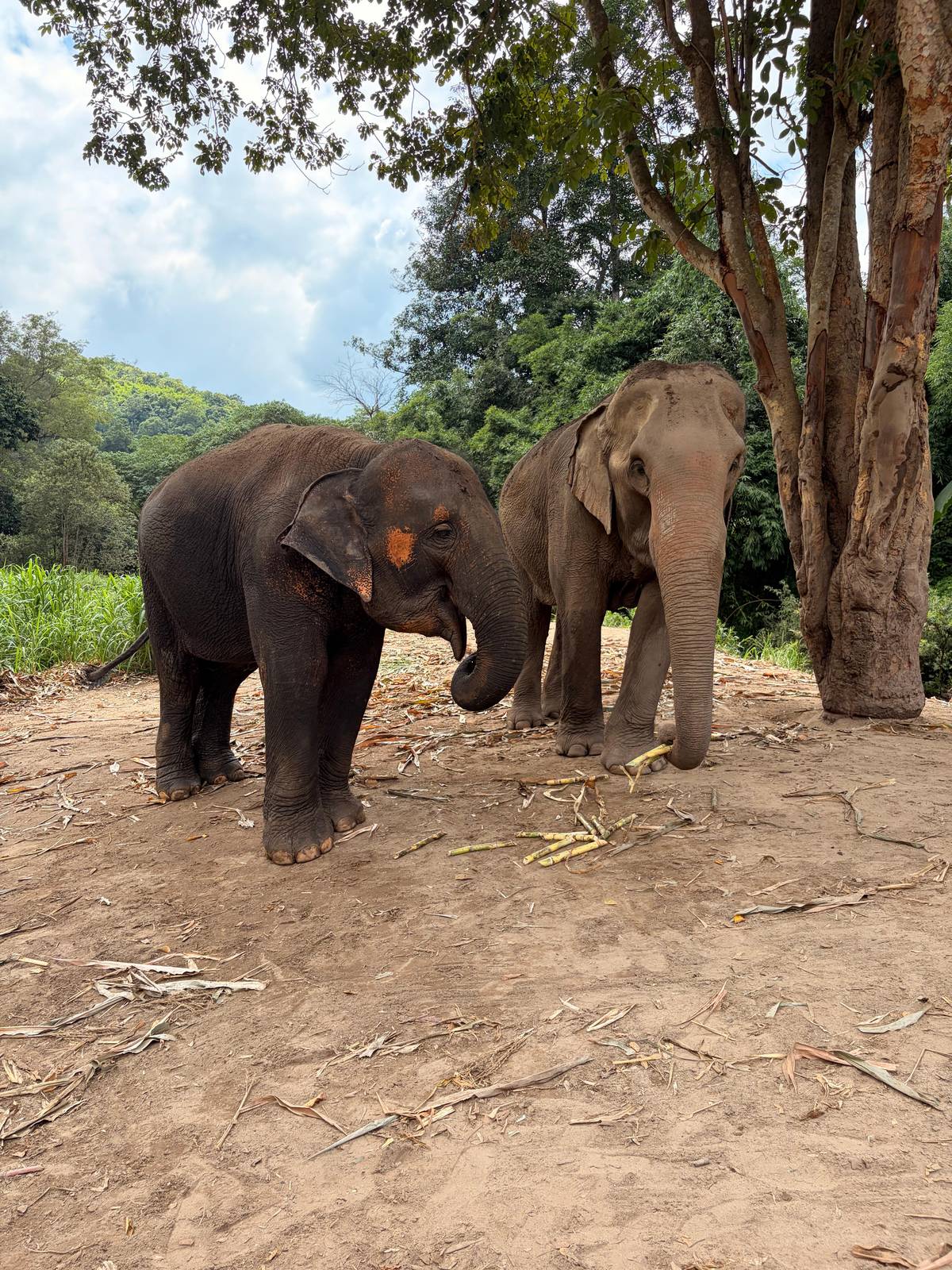 Green & wet
May to October
Decision helper
Start from what matters most to you on the day
Highs of 29.2 to 32.9 °C and 1 to 3 rainy days a month.1
A feeding half-day runs 5 to 5.5 hours, from $26.
On the site tour, heavy rain cancels both for a cooking class.
These months bring 149 to 223 mm of rain each at the city station.1
Booking the site tour costs nothing to undo until 24 hours ahead.
Elephants tend to rest and nap during the hottest hours of the day.
From March the heat builds quickly. March averages a daily high of 35.4 °C and April 36.7 °C, with lows of 20.1 °C and 23.4 °C.1 Rain is still scarce, with 2 days in March and 5 in April that see at least 1 mm.1 These are the months when a cool river and a shaded forest path feel like the best parts of the day.
Elephants feel the heat too. The Smithsonian notes that elephants tend to rest during the hottest hours of the day, and that they cover their skin with dirt, sand and mud to protect it from sun and insects.45 On a hot April afternoon you may find the herd standing in shade or in the river rather than walking, and that is natural behaviour worth watching quietly.
For people, the CDC advises shade during the hottest time of day, 10 a.m. to 4 p.m., and salty snacks with plenty of water when you are outside for many hours.67 In these months a shorter visit can be the better choice: a feeding programme at the same camp runs 5 to 5.5 hours and starts from $26.
Checklist
Cost calculator
Choose the length of day that suits the season.
Total from$114
per guest from $57
Check availabilityfree cancellationWe multiply each elephant day's GetYourGuide starting price by the head count you enter and convert it with the European Central Bank reference rate; the checkout page has the binding figure.
Video
Until you tap play, the video stays unloaded.
The rains arrive with the southwest monsoon. In 2026 the Thai Meteorological Department marked the onset of the rainy season on May 15, after rainfall increased across the country in the middle of the month.28 At the Chiang Mai station, May jumps to 168 mm of rain on 12 days with at least 1 mm, from 54 mm in April.1
In August the station averages 223 mm on 17 days, and in September 207 mm on 15 days.1 Showers in the north often come as heavy afternoon bursts rather than all-day drizzle, so a wet month can still bring dry mornings in the forest. June and July sit lower, with 118 mm and 149 mm.1
Heavy rain is the one thing that changes the site tour. Its listing says that in heavy rain the waterfall and the bamboo rafting are cancelled for safety, and a Khao Soi cooking class takes their place. A hands-off trekking listing in Mae Chaem warns that its hike gets harder in the rainy months. Muddy trails and fast rivers are part of the deal from May to October. Pack a poncho, wear shoes that grip and leave anything precious at the hotel.
The wet season has its own appeal. The forest turns deep green, the rivers run full and the dust of the dry months settles. A bamboo raft on a fuller river moves faster and splashes more, which suits anyone who finds the gentle drift of the dry season a little slow. Rice fields along the drive out of the city are at their brightest, and waterfalls carry far more water than in March.
October is a turning month. Rain eases to 124 mm on 9 days, and November falls to 41 mm on 3 days.1 Late October and early November can combine green hills with fewer washed-out afternoons, a good compromise if your dates are flexible and you want both the full river and a dry trail. Air feels fresher after the rains, and the river still carries enough water for a lively drift.
If you travel in the wet months, book in a way that lets you move the day. The site tour offers free cancellation up to 24 hours before, and you can reserve now and pay later. Keep a spare day in your Chiang Mai plans, check the forecast the evening before, and switch dates if a heavy storm is due rather than hoping the raft still runs.
Day length barely changes this close to the tropics. By our own calculation, mid-month daylight runs from 11 hrs in December to 13.3 hrs in June.1 A 9-hour day fits within daylight in any month of the year.1 What changes is the heat at midday and the chance of an afternoon shower, not the light. Plan the day around the heat and the clouds, and the light will take care of itself.
Elephants spend about three-quarters of each day eating or moving towards food or water, and they rest during the hottest hours, the Smithsonian notes.94 In the hot season, the morning walk is when you are most likely to see the herd on the move. In the cool months the rhythm is gentler, and an afternoon river visit stays comfortable.
Whatever the month, read the listing's notes the evening before and pack for both sun and rain. Lunch, fruits and drinking water are included on the site tour, but a towel is not, and a dry change of clothes is welcome in any season. The pickup time is on your voucher, so check it once more before you sleep.
Your elephant day
Hotel pickup option in Chiang Mai, lunch on the day, and no fee to cancel until 24 hours ahead.
Roughly November to April. The Chiang Mai station averages 1 to 5 rainy days a month from November to April.1
Around the middle of May. In 2026 the Thai Meteorological Department marked the onset of the rainy season on May 15.2
Very hot by day. April averages a daily high of 36.7 °C and a low of 23.4 °C at the Chiang Mai station.1
Yes, heavy rain can. The site tour's listing swaps the waterfall and the rafting for a Khao Soi cooking class in heavy rain.
Yes, with flexible plans. August averages 17 rainy days, so book free cancellation and keep a spare day.1
They rest more. The Smithsonian notes that elephants tend to rest during the hottest hours of the day.4
Mornings are mild, not cold. January lows average 15.7 °C at the city station; the hills can feel fresher at dawn.1
Sources